A pre-incident baseline, sealed
A pre-incident EFA captures the worker's true starting condition. The data is stored read-only and is never seen by the employer unless and until a claim is filed.

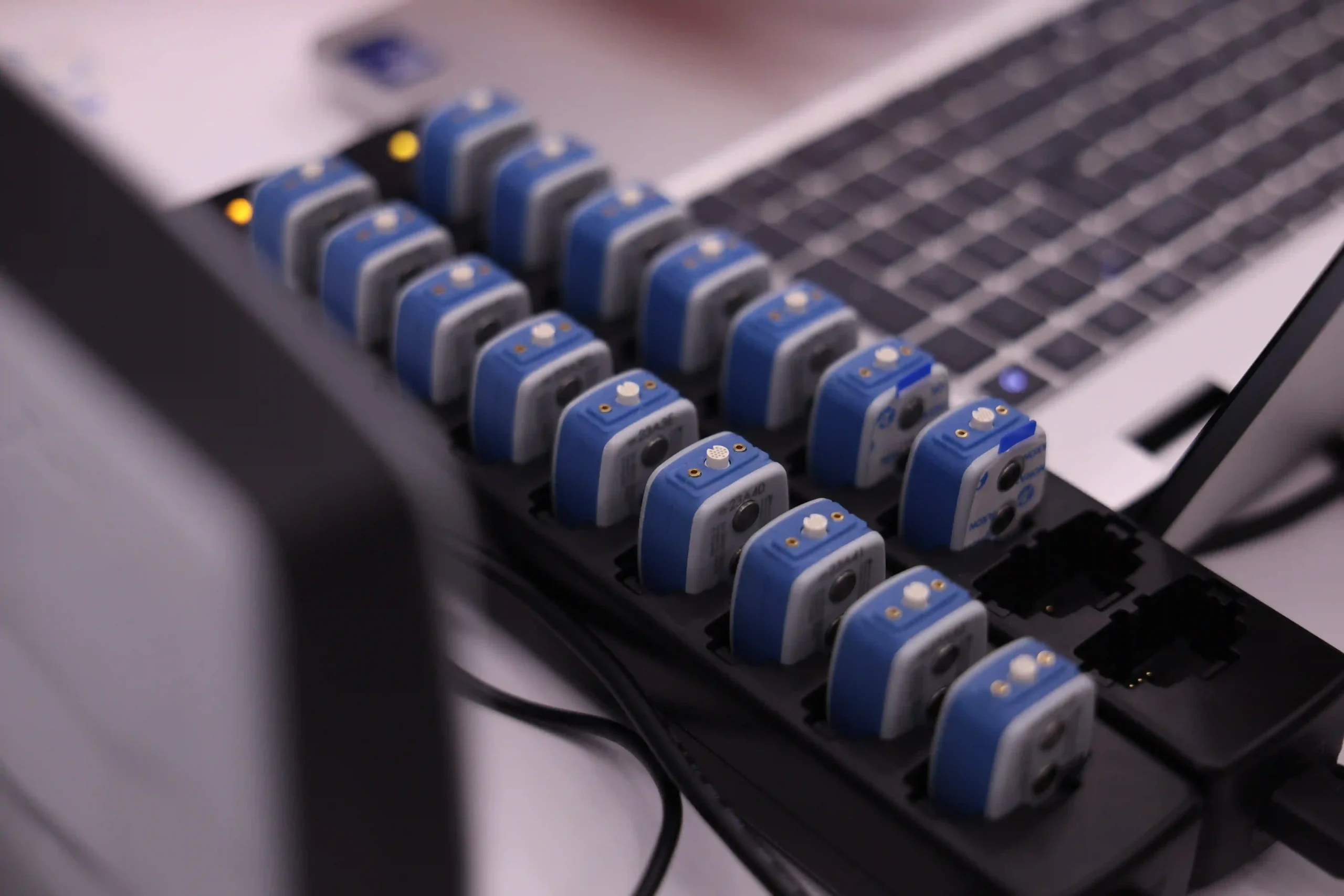
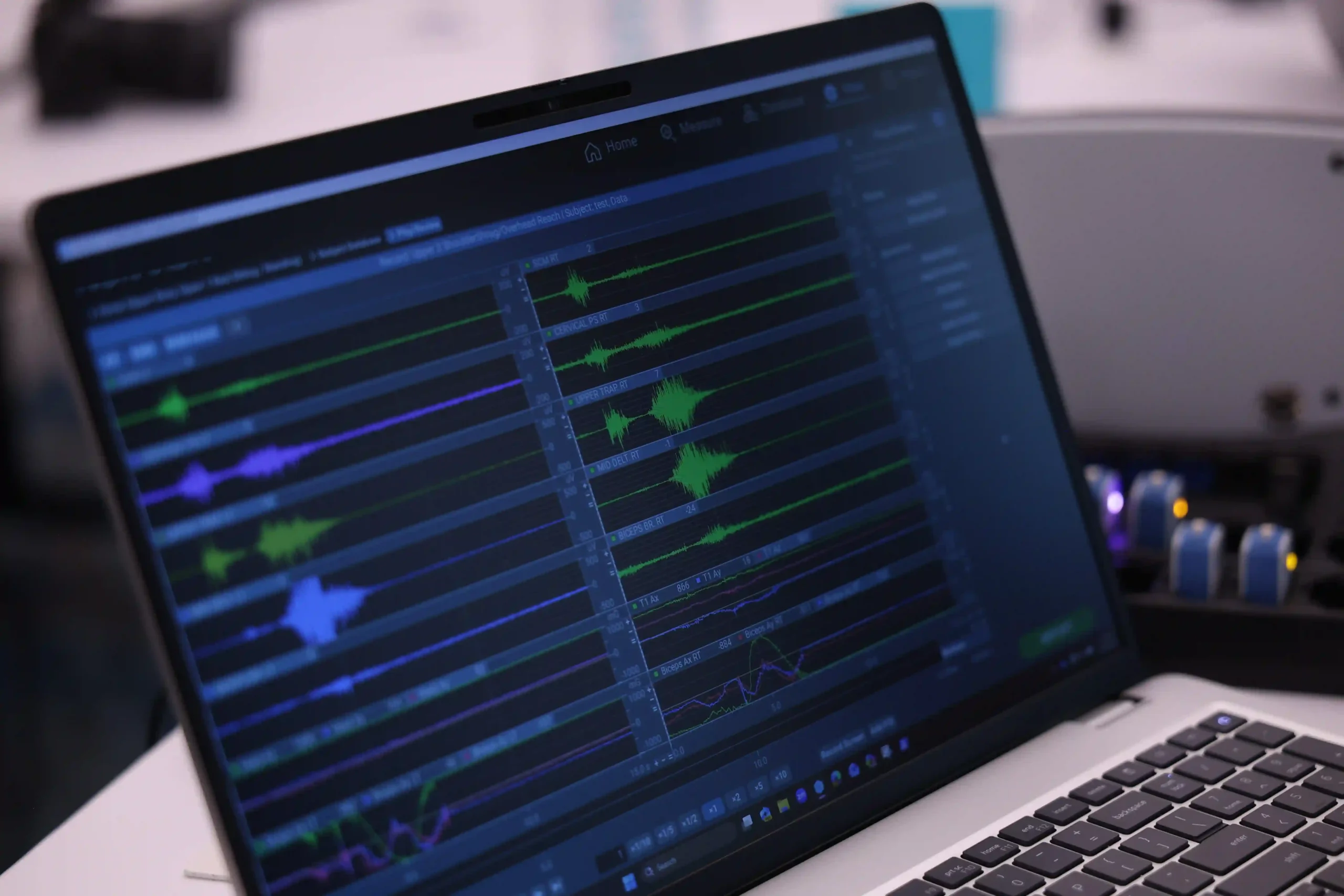
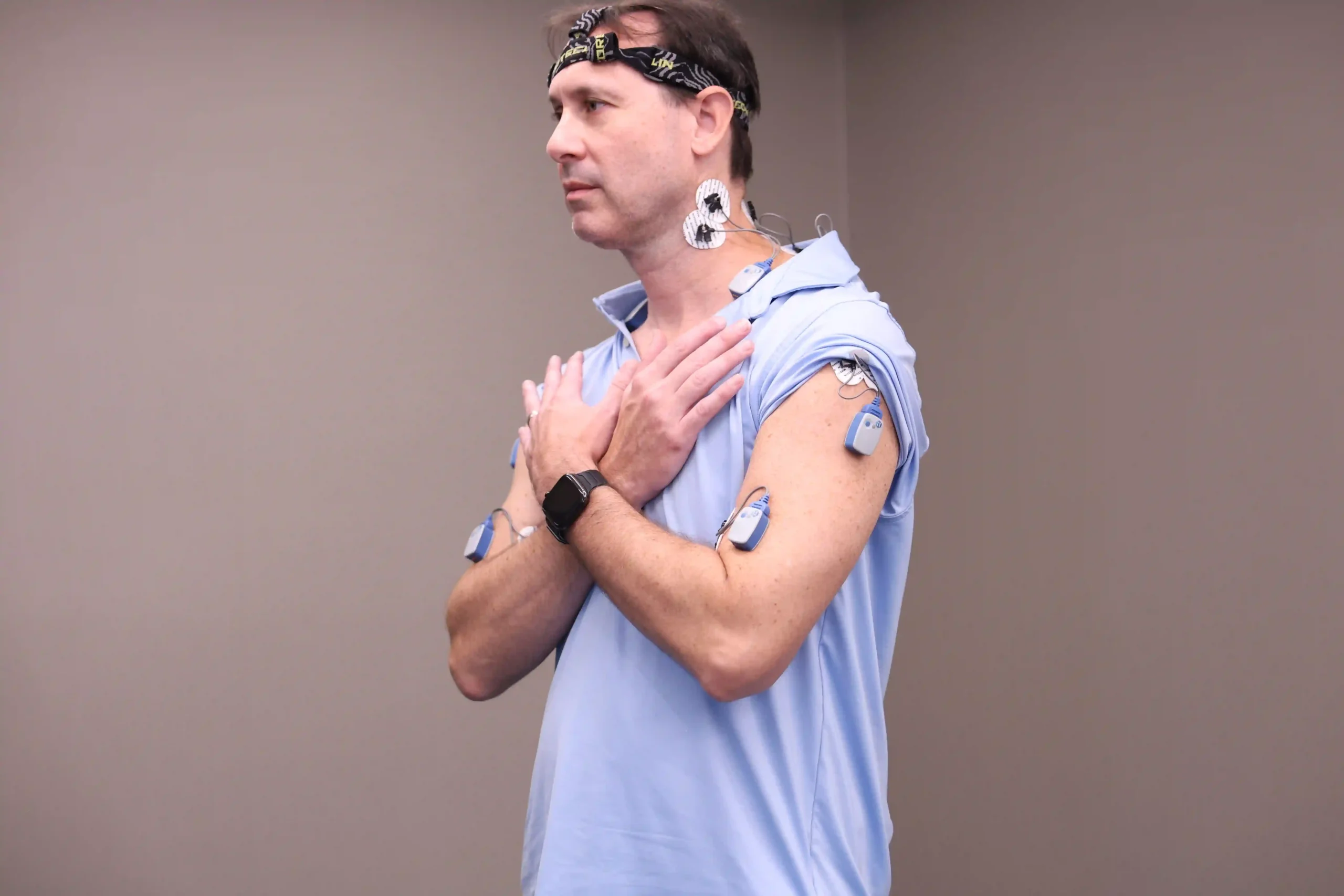
How It Works The highest-cost claim type in workers' compensation is the one with no objective test in the file. This changes that. Soft-tissue injury - the strained back, the sore neck, the sore shoulder - is the highest-volume workers' compensation claim type and the one traditional cost control cannot touch. It resists control for one reason: the entire claim rests on what the claimant says they feel. There is no objective test in the file, so there is nothing to argue with. The adjuster reserves for the worst case, the reserve drives the experience modifier, and the modifier prices the next three renewals. This strategy replaces the subjective exam with data. Precision Motion Health - formerly Emerge Diagnostics, renamed in 2024 - runs an FDA-registered (Class II), patented electromyographic functional assessment (EFA). It measures involuntary muscle response rather than self-reported pain - muscle activity, range of motion and force, captured by wireless surface sensors rather than described in an exam room. The program around it is EFA-STM: a sealed pre-incident baseline, a matching assessment when an incident is reported, and a comparison that separates what happened at work from what the worker already had. A pre-incident EFA captures the worker's true starting condition. The data is stored read-only and is never seen by the employer unless and until a claim is filed. Workers' compensation obliges an employer to return an injured employee to their pre-injury condition. The baseline establishes that condition in objective medical evidence, so only the work-related portion is accepted and treated. When everyone knows function is on record, what gets reported is closer to what actually happened. The program reads as a culture of accountability, not an accusation - and a complete, candid incident log is worth more to a safety program than a short one. Beyond claim defense, the assessment drives injury-risk screening, return-to-work decisions and better treatment targeting. Value does not depend on winning arguments. The mechanism Three steps. The whole argument turns on the fact that step one happens before any incident is reported. A pre-incident EFA captures the worker's true starting condition - back, neck and shoulder. Non-invasive, non-loading, under thirty minutes. The data is sealed and never viewed by the employer. An incident is reported. A network physician licensed in the worker's own state runs a telemedicine visit with a virtual physical exam and authorizes the assessment, captured within 24 to 48 hours while the presentation is still fresh. The two are compared to determine objectively whether - and by how much - function has changed against that worker's own baseline. Where a change is found, we issue site-specific treatment recommendations. The assessment Wireless surface sensors are placed across the relevant muscle groups, and live EMG, range-of-motion and accelerometer data is captured for each side and each muscle through a guided set of movement intervals. It is a physiological record, not a subjective exam. It is non-invasive and non-loading - the worker is not asked to lift or strain, so the test itself cannot injure them. One session captures five validated functional measures: The output supports a defensible claim decision and tells a treating clinician which region actually moved. The clinical benefit is the same measurement read for a different purpose. Bilateral capture matters: each side is its own control, so an asymmetry is visible without reference to anyone else's normal. Where it fits Three end in no measured change and one confirms a real injury. A program that only ever returned the first three would not be measuring anything. A prior condition and a questionable workplace event blur into one claim. The baseline separates them: if the pathology is on both tests, it was there before the incident. Involuntary muscle response is far harder to direct than a pain report. The assessment shows whether effort across the requested tasks was full and consistent - a finding about the test, not a judgment about the person. The pattern we see most often after the first two: a reported symptom with no objective physiological finding behind it. Not a claim that nobody is hurt - a statement that the measurements do not show a change. The same data confirms genuine injury just as readily, and points care at the affected region on day one. A program that only ever returns one answer is not measuring anything. Program objectives These are objectives, not guarantees. What any single account gets depends on its own exposure, reporting discipline and how the findings are acted on. The wider program The model puts the client at the center of two orbits - one before a claim exists, one after it does. The baseline program is one of seven elements; it does not replace the other six. Soft-tissue management is evidence for these people to use, not a substitute for them. Transparency A real-time client portal carries baseline completion by location and population, the status of every post-incident referral from request through determination, and volume, turnaround and outcome reporting on demand. HIPAA compliant, self-serve, no weekly file pulls. This matters on a staffing or driver book. Baseline coverage is the number that decides whether the program works, it builds as people are hired, and it is invisible unless somebody is watching it by location. Ask for a live walkthrough and ask specifically what the employer can and cannot see about an individual worker before a claim exists. The sealed-baseline protocol and the portal access model must agree. Clinical leadership The clinical work is led by Frank Tomecek, MD, a board-certified neurosurgeon and co-author of peer-reviewed EFA research, with a dedicated science team behind him. Analysis applies peer-reviewed, research-based analytics as pathological markers of myofascial injury. Delivery is mapped to the client's footprint: mobile technicians on site where hiring volume supports it, and a growing clinic network for dispersed hiring. That sentence is the whole discipline of the program. The baseline is taken before any incident is reported, and it is opened only when an incident is reported. If the post-incident assessment matches it, there is no measured change to compensate. If it does not, the change is documented, and care is aimed at the region that actually moved. The same test returns both answers, which is the only reason either one is worth anything.
The claim type nobody can argue with
A pre-incident baseline, sealed
The comparison resolves the pre-existing-condition fight
Reporting gets more candid
The same data matters even when nothing is contested
A sealed baseline, then a comparison
Baseline
Post-incident
Change of condition
What the assessment actually is
The four patterns the comparison resolves
Pre-existing condition
Effort and consistency
No physiological evidence of injury
A real new injury, confirmed
What the program is built to deliver
The baseline is one component of seven
Proactive - before any claim
Proactive - after a claim is reported
Every step, visible in real time
Who stands behind the reading
We never claim a worker isn't hurt - only whether the findings changed from their own baseline.